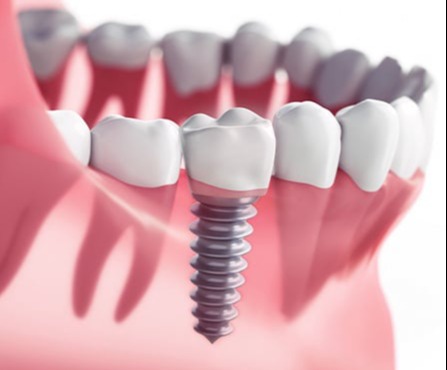
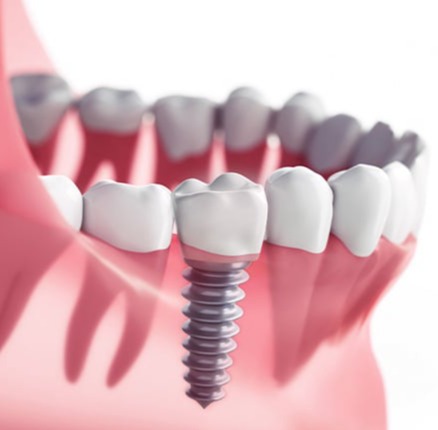
What does the implant placement procedure look like?
Implant therapy is planned individually. The number of visits, healing time and final solution depend on the complexity of the case and the condition of the tissue.
1. Examination and assessment of the condition
The first step is an examination of the oral cavity, assessment of the condition of the teeth and gums, as well as a discussion of your needs and expectations.
2. Diagnostics and planning
Based on the clinical findings and appropriate scans, the quantity and quality of the bone, the position of important anatomical structures and the possibilities for implant placement are assessed. When indicated, 3D diagnostics are also used.
3. Implant placement
The implant is placed in the bone under local anesthesia, according to a predefined plan. Appropriate surgical protocols and infection control measures are applied during the procedure.
4. Healing period
After placement, it takes time for the implant to connect to the bone. The duration of this period depends on individual conditions, the type of procedure and the stability of the implant.
5. Fabrication and placement of the dental restoration
When conditions permit, a crown, bridge or other planned prosthetic restoration is fabricated and placed. In certain cases, it is possible to temporarily load the implant earlier, but only when the clinical conditions justify it.
6. Check-ups and maintenance
Regular check-ups and proper oral hygiene are important for maintaining the health of the tissues around the implant and the long-term success of the therapy.
Is it possible to place an implant immediately after tooth extraction ?
In certain cases, an implant can be placed immediately after tooth extraction. This procedure is known as immediate implantation.
However, it is not suitable for every patient. The decision depends on the condition of the bone, the presence of infection, the condition of the surrounding soft tissues and the possibility of achieving adequate primary stability of the implant.
When immediate implantation is not the best solution, implantation is planned after healing or, if necessary, an additional bone preservation or replacement procedure.
Is there enough bone for the implant ?
A sufficient amount and appropriate quality of bone are important for the proper placement and stability of the implant.
If the bone has decreased after tooth loss, long-term wearing of dentures or for other reasons, in some cases it is possible to perform bone replacement procedures. In certain patients, a maxillary sinus floor lift procedure may also be indicated in the upper jaw.
The possibilities depend on the individual findings. Therefore, an examination with appropriate diagnostics is the first step in assessing whether implant therapy is possible and which approach makes the most sense.
Is implant placement painful ?
Implant placement is most often performed under local anesthesia, so you should not feel any pain during the procedure, although pressure and a feeling of manipulation are possible.
After the procedure, transient sensitivity, swelling, or discomfort may occur. Their intensity depends on the extent of the procedure and the individual reaction of the body.
The patient receives instructions on post-operative care and therapy when necessary.
How long does dental implant therapy last ?
There is no single deadline for all patients.
In simpler cases, therapy can be completed in a shorter period, while more complex cases, especially those requiring bone replacement or additional surgical procedures, can last significantly longer.
The duration is influenced by:
- the condition of the bone and gums;
- the need for additional surgical procedures;
- the position and number of implants;
- the method of making and loading the prosthetic restoration;
- individual healing.
After the examination, you will receive a treatment plan with a rough timeline and an explanation of the individual phases.
How long do dental implants last ?
Dental implants can provide a long-term solution, but their lifespan cannot be guaranteed in advance.
Long-term stability is influenced by proper planning and placement of implants, the condition of the gums and bone, oral hygiene, smoking, general health and regular check-ups.
It is important to understand that an implant is not a substitute for daily oral health care. Like natural teeth, prosthetic restorations on implants require proper maintenance and professional checks.
Why choose Bačković Dental Medicine ?
Implant therapy does not only involve implant placement. Diagnostics, surgical planning, prosthetic design and maintenance are equally important for a successful result.
At Bačković Dental Medicine, we pay attention to:
- Individual treatment plan - the solution is chosen according to the clinical findings and needs of the patient.
- Modern digital diagnostics and planning - intraoral scanning, when indicated, can contribute to more precise data transfer and planning of prosthetic restoration.
- The connection between the surgical and prosthetic phases - the goal is to plan the implant in accordance with the future function and appearance of the tooth.
- A clear explanation of the procedure - the patient receives information about the possibilities, limitations, duration and costs of therapy.
- Long-term maintenance planning – check-ups and oral hygiene are an integral part of implant therapy.
Our goal is to find a solution together that suits your condition, needs and expectations.
Schedule an appointment for dental implants in Belgrade
If you are missing one or more teeth, the first step is a professional assessment of the possibilities of implant therapy.
At Bačković Dental Medicine, we will discuss your needs, assess the current condition and present possible options for tooth replacement.
Contact us and schedule an appointment . Together we will create a treatment plan tailored to your situation.
Bačković Dental Medicine – Belgrade
Your new smile starts with a good plan.