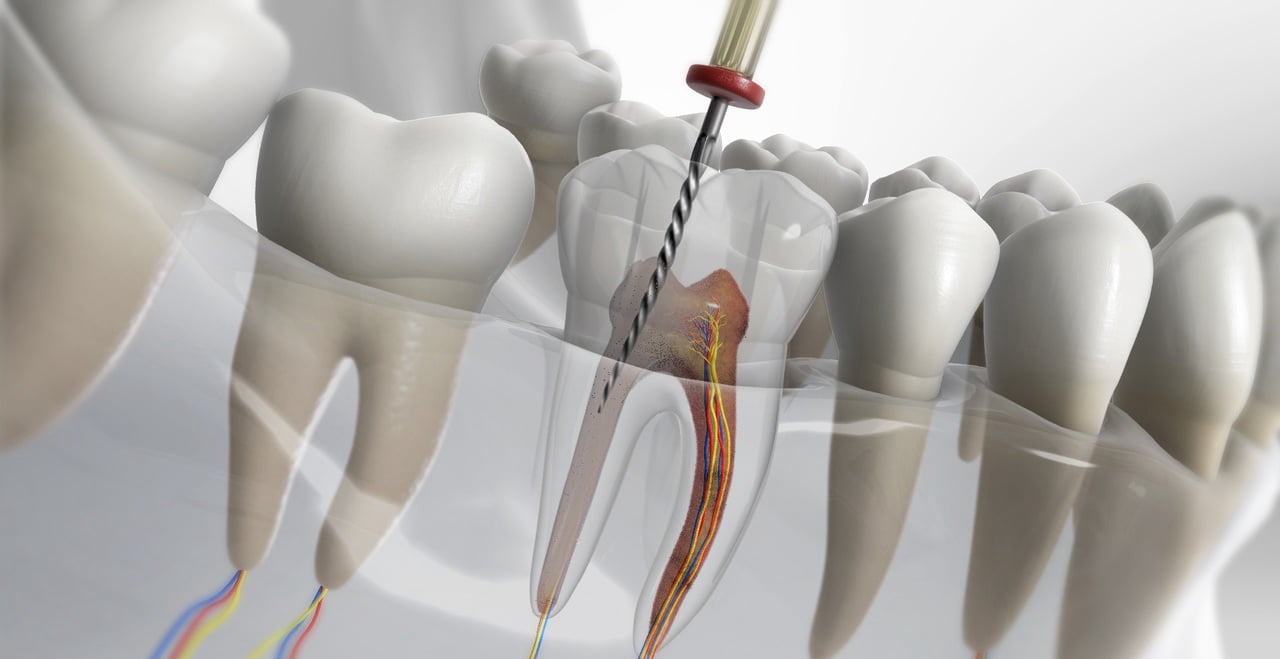
Preserve your natural tooth with modern endodontic treatment
Endodontics is a branch of dentistry that deals with the treatment of diseases of the dental pulp and tissue around the top of the tooth root. When bacteria penetrates the interior of a tooth due to deep decay, trauma or other damage, inflammation or death of the pulp can occur, which often requires root canal treatment.
At Bačković Dental Medicine in Belgrade, we apply modern endodontic procedures, including **mechanical root canal treatment**, with the goal of removing infected tissue, enabling quality cleaning and shaping of the canal, and preserving the natural tooth whenever possible.
Our goal is for the treatment to be precise, carefully planned and adapted to each patient.
What is root canal treatment ?
Root canal treatment, also known as *Root Canal Treatment*, is a procedure that removes inflamed, infected or dead pulp from inside the tooth.
After accessing the inside of the tooth, the root canals are carefully cleaned, shaped and disinfected, and then filled with appropriate materials to prevent the re-infiltration of bacteria.
After endodontic treatment, the tooth is definitively restored with a filling or, when indicated due to the extent of the damage, with a dental crown.
Timely treatment can enable the natural tooth to be preserved and set to function in the dental set.
Mechanical treatment of the root canal - a modern approach to endodontics
Mechanical treatment of the root canal represents a modern method in which specialized endodontic instruments driven by a dental motor are used. They enable controlled cleaning and shaping of the canal, while respecting their natural anatomy.
Compared to purely manual instrumentation, suitable machine systems can contribute to a more efficient and uniform treatment of the canal, depending on the anatomy of the tooth and the clinical case.
Advantages of mechanical treatment of the root canal:
- Precise treatment - controlled shaping of the canal in accordance with their anatomy.
- More efficient work – the possibility of faster instrumentation in appropriate clinical situations.
- Thorough cleaning – preparation of the channel for chemical disinfection and definitive filling.
- Adaptation to complex canals – application of appropriate instruments and techniques depending on the shape and curvature of the canal.
- Preservation of the natural tooth – the basic goal of endodontic treatment.
It is important to emphasize that mechanical instrumentation is not a substitute for proper diagnostics, disinfection and quality filling of the canal. The result depends on the complete endodontic procedure and the condition of the tooth.
When is root canal treatment necessary ?
Endodontic treatment may be necessary when the dental pulp is irreversibly inflamed or infected, as well as in the case of its death.
Symptoms that may indicate a problem include:
- Spontaneous toothache or pain that worsens at night.
- Prolonged pain after consuming hot or cold drinks.
- Pain when chewing or pressing on the tooth.
- Swelling of the gums or the appearance of a fistula near the tooth.
- Change in tooth color after injury.
- Deep caries or a finding of infection around the apex of the root on the X-ray.
Sometimes a tooth that requires root canal treatment does not cause any symptoms. Therefore, a clinical examination and appropriate X-ray diagnostics are important for establishing an accurate diagnosis.
If you have severe pain or swelling, we recommend that you contact your dentist as soon as possible.
What does the root canal treatment procedure look like ?
1. Examination and diagnosis
The assessment includes a dental examination, symptom analysis and appropriate X-ray diagnosis. Based on the findings, it is determined whether endodontic treatment is necessary and which approach is most appropriate.
2. Preparation of the tooth
After local anesthesia, when indicated, the dentist accesses the inside of the tooth and finds the entrances to the root canals. Isolating the tooth during the procedure helps to maintain a clean working field and prevent contamination.
3. Machining and canal cleaning
Canals are carefully processed and shaped with special endodontic instruments. At the same time, appropriate solutions are used for rinsing and disinfection in order to reduce the amount of bacteria and remove tissue remains.
4. Root canal filling
When the canals are adequately cleaned, shaped and prepared, they are filled with biocompatible materials that enable their sealing.
5. Definitive restoration of the tooth
After endodontic treatment, the tooth must be properly closed and restored. Depending on the remaining amount of healthy tooth tissue, this can be a composite restoration or a dental crown.
Endodontics at Bačković Dental Medicine - Belgrade
At Bačković Dental Medicine, the approach to endodontic treatment is based on precise diagnosis, careful treatment of the root canal and planning of the final restoration of the tooth.
We pay special attention to the preservation of natural teeth, the application of modern techniques and the selection of therapy in accordance with the individual needs of the patient.
If you have a toothache, deep caries or a root canal treatment is recommended for you, schedule an examination so that we can assess the condition of the tooth and the possibility of its preservation.
Bačković Dental Medicine - modern endodontics and care for your natural smile.
Schedule an examination and find out which solution is best for the health of your teeth.